

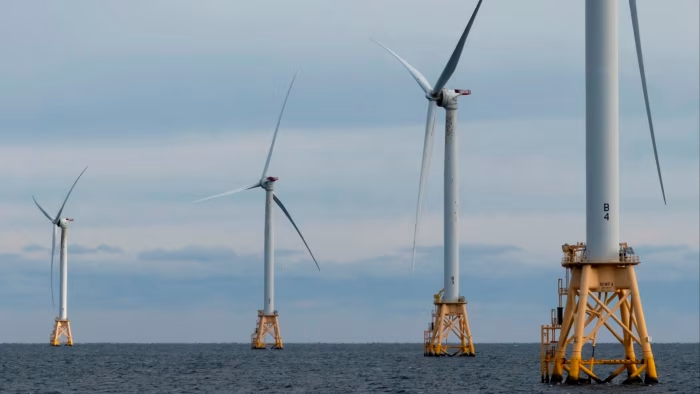
The United States government has ordered an abrupt pause on several major offshore wind projects along the East Coast, a move that has sent shockwaves through the renewable energy sector and reignited debate over the country’s long-term clean energy strategy.
The decision affects multiple large-scale wind farms that were already under construction or nearing completion, marking one of the most significant disruptions to offshore wind development in U.S. history.
What the Government Decided
Federal authorities announced that work on five offshore wind projects must stop immediately while national security concerns are reviewed. The pause applies to projects located off the coasts of New England, New York, and Virginia — regions that have invested heavily in offshore wind as a cornerstone of future electricity supply.
Officials stated that the review is necessary to reassess potential risks linked to offshore wind infrastructure, particularly as technologies and geopolitical threats evolve. While details remain limited, the government emphasized that the decision was made in the interest of public safety and national defense.

Why National Security Is Being Cited
At the center of the debate are concerns that large offshore wind turbines could interfere with radar and surveillance systems. Wind turbines are among the tallest human-made structures at sea, and their rotating blades can create signal interference under certain conditions.
Critics of offshore wind have long argued that this “radar clutter” could complicate the detection of aircraft or maritime threats. Supporters counter that such risks are well-understood, technologically manageable, and were already evaluated during earlier approval processes.
The current pause suggests that officials believe existing assessments may no longer be sufficient, or that new risks warrant renewed scrutiny.

Projects Already Underway
What makes this decision particularly controversial is timing. Several of the paused projects had already cleared years of environmental review, defense consultation, and regulatory approval. In some cases, turbines were already installed and partially connected to the power grid.
Industry leaders warn that stopping construction mid-project could:
-
Drive up costs significantly
-
Delay clean energy delivery by years
-
Undermine investor confidence
-
Lead to legal disputes over contracts and permits
For developers and states, the pause represents not just a delay, but a fundamental uncertainty about whether the projects will ever resume.
Impact on Clean Energy Goals
Offshore wind plays a central role in U.S. plans to reduce carbon emissions, diversify energy sources, and meet rising electricity demand. Coastal states have relied on offshore wind to replace aging fossil fuel infrastructure and support grid stability as electrification expands.
Halting multiple projects at once threatens to slow progress toward these goals and could force states to rely longer on gas or imported energy. Analysts also warn that policy reversals of this scale can discourage long-term investment in renewable infrastructure.
Political and Industry Reaction
The decision has triggered strong reactions across the political spectrum. Supporters of the pause argue that national security must take priority over energy timelines, insisting that any potential vulnerability deserves thorough review.
Opponents say the move lacks transparency and risks politicizing energy infrastructure. They point out that offshore wind projects were previously reviewed with defense agencies involved and argue that revisiting approved projects sets a troubling precedent.
State leaders, labor groups, and clean energy advocates have expressed concern about job losses, supply chain disruptions, and damage to regional economic plans built around offshore wind development.

What Happens Next
The future of the paused projects remains uncertain. Federal agencies will now conduct a review to determine whether the security concerns can be mitigated or whether project designs need to be altered.
Possible outcomes include:
-
Approval with new mitigation requirements
-
Extended delays pending further study
-
Partial or full cancellation of some projects
Legal challenges are also likely, given the advanced stage of construction and prior approvals.
A Broader Energy Debate
Beyond the immediate pause, the decision reflects a deeper tension in U.S. energy policy: how to balance climate commitments, economic development, and national security in an increasingly complex world.
Offshore wind was once seen as a relatively straightforward path to clean power. This episode shows that even renewable energy projects can become entangled in strategic, political, and security concerns.
How the government resolves this pause will likely shape not just offshore wind, but the future of large-scale renewable infrastructure in the United States.