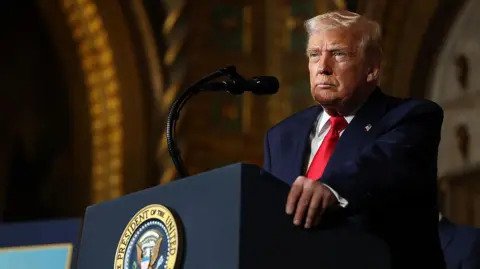

Former U.S. President Donald Trump has said that significant progress has been made in negotiations aimed at ending the war in Ukraine, while cautioning that several difficult and unresolved issues continue to block a final agreement. His remarks suggest that diplomatic efforts are closer to a breakthrough than at any point in recent years — but far from complete.
Talks Moving Forward, Momentum Building
Speaking after recent high-level discussions with Ukrainian leadership, Trump described the negotiations as productive and constructive, noting that much of the framework for a potential peace deal is already in place. According to him, large portions of the proposed agreement have been broadly agreed upon, indicating growing alignment on major principles such as security arrangements and de-escalation.
Trump emphasized that progress has been steady, portraying the talks as focused on realistic outcomes rather than symbolic gestures. He suggested that the gap between negotiation positions has narrowed considerably.
What Are the ‘Thorny Issues’?
Despite optimism, Trump acknowledged that several sensitive topics remain unresolved, calling them “thorny issues” that require careful handling.
Territorial Disputes
The most complex challenge continues to be territory. Control over parts of eastern Ukraine remains a deeply contentious issue, touching on national identity, sovereignty, and public opinion. Any proposal involving land or special status arrangements faces political and constitutional hurdles.
Ceasefire Conditions
Agreeing on the exact terms of a ceasefire has also proven difficult. Questions remain about troop withdrawals, monitoring mechanisms, and guarantees that fighting will not resume once guns fall silent.
Security Guarantees
While broad consensus appears to exist on the need for long-term security guarantees for Ukraine, the structure and enforcement of those guarantees remain under discussion. Balancing deterrence with regional stability is one of the most delicate aspects of the talks.

Why These Talks Matter Now
After years of fighting, fatigue is growing on all sides. The war has reshaped European security, disrupted global food and energy markets, and caused massive humanitarian suffering. The current diplomatic push reflects recognition that a purely military outcome may be unsustainable.
Trump’s comments suggest that negotiators are increasingly focused on ending active hostilities first, then resolving deeper political questions through phased agreements.
International Dynamics at Play
The peace effort is unfolding against a complex international backdrop. European nations are closely involved in shaping post-war security structures, while global powers are watching closely due to the conflict’s broader implications.
Trump has positioned himself as a mediator capable of pushing talks forward by emphasizing leverage, deal-making, and pragmatic compromise — though critics argue that compromises must not undermine Ukraine’s sovereignty or long-term stability.
What Happens Next
Negotiations are expected to continue in the coming weeks, with technical teams refining language and exploring options for resolving remaining disputes. Trump suggested that while a final agreement is not imminent, the direction of talks is encouraging.
Any eventual deal would likely require:
-
Broad political support within Ukraine
-
International backing for enforcement
-
Clear mechanisms for monitoring and compliance
Why the Outcome Will Shape the Future
If successful, these talks could end one of the most destructive conflicts in modern European history and set a precedent for resolving large-scale wars through diplomacy after prolonged fighting. If they fail, the conflict risks becoming frozen or escalating further.
For now, Trump’s message is cautiously optimistic: peace is closer than before, but the hardest decisions still lie ahead.