

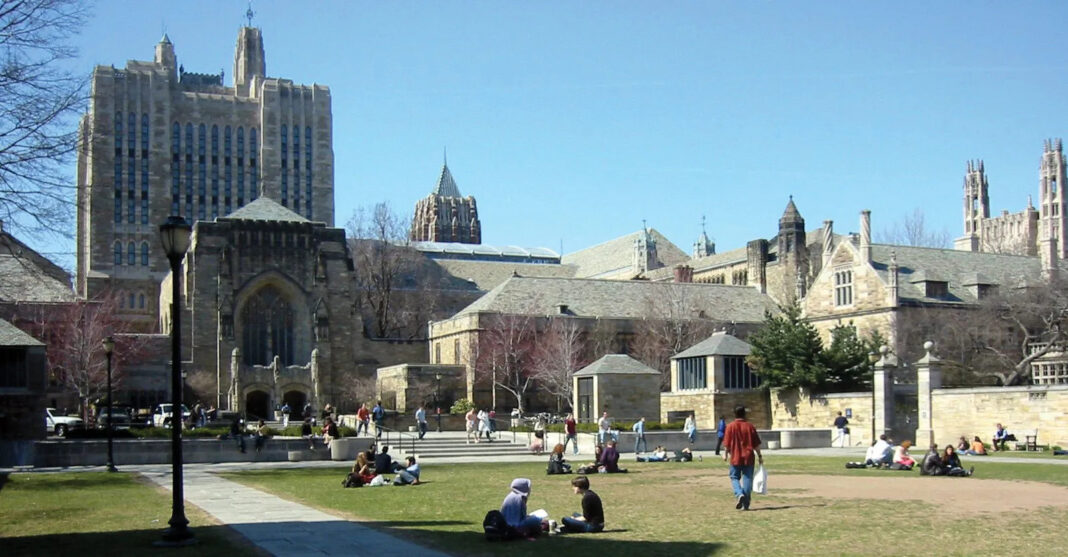
Founded over three centuries ago, Yale is synonymous with academic excellence, global leadership, and intellectual tradition.
Overview of Yale University
-
Location: New Haven, Connecticut
-
Founded: 1701
-
Type: Private Ivy League University
-
Motto: Lux et Veritas (Light and Truth)
Yale is one of the oldest universities in the United States and a core member of the Ivy League. It has shaped presidents, judges, Nobel laureates, writers, and global leaders across centuries.

Global Ranking and Reputation
Yale consistently ranks among the top 10 universities in the world and is widely regarded for its strength in:
-
Law
-
Humanities
-
Political science
-
Economics
-
Medicine
-
Arts and drama
Its reputation rests not only on rankings but on the depth of scholarship and leadership it produces.
Academic Structure
Yale is composed of multiple schools, the most prominent being:
Yale College (Undergraduate)
-
Liberal arts-focused education
-
Small class sizes
-
Strong emphasis on critical thinking and writing
Yale Graduate & Professional Schools
-
Yale Law School (arguably the best law school globally)
-
Yale School of Medicine
-
Yale School of Management
-
Yale School of Drama
-
Yale School of Architecture
Each school operates with academic independence while benefiting from Yale’s shared resources.

Popular Courses and Majors
Some of Yale’s most sought-after programs include:
-
Political Science
-
Economics
-
Global Affairs
-
History
-
Law
-
Medicine
-
Environmental Studies
-
Drama and Performing Arts
Yale is especially known for producing leaders in law, government, academia, and the arts.

Unique Academic Culture
Residential College System
Yale’s students live in residential colleges that create close-knit academic communities — blending housing, dining, mentorship, and intellectual life.
Flexible Curriculum
Yale allows students to explore widely before declaring majors, encouraging interdisciplinary learning and intellectual curiosity.
No Grades at Yale Law
Yale Law School famously uses a pass/fail system, prioritizing learning over competition.
Admissions: How Hard Is It to Get In?
Yale is one of the most selective universities in the world.
Undergraduate Admissions
-
Acceptance rate: Extremely low
-
Strong academic record required
-
Holistic evaluation (grades, essays, extracurriculars, leadership)
Graduate Admissions
-
Competitive entrance exams
-
Strong academic background
-
Research experience or professional distinction
International students are encouraged to apply and receive equal consideration.
Tuition and Financial Aid
Yale follows a need-blind admissions policy:
-
Ability to pay does not affect admission
-
Generous financial aid packages
-
Many students graduate with little or no debt
Yale is widely regarded as one of the most affordable elite universities once financial aid is applied.

Campus Life and Student Experience
-
Rich arts and cultural scene
-
World-class libraries and museums
-
Active student organizations
-
Strong athletic tradition (Bulldogs)
The campus blends historic architecture with modern facilities, creating a unique academic environment.
Notable Alumni
Yale’s alumni network includes:
-
U.S. Presidents
-
Supreme Court Justices
-
Nobel Prize winners
-
Global CEOs
-
Influential writers, artists, and filmmakers
This powerful alumni base contributes to Yale’s influence worldwide.
Career Outcomes
Graduates of Yale go on to careers in:
-
Law and judiciary
-
Government and diplomacy
-
Academia and research
-
Finance and consulting
-
Arts and media
Yale degrees carry immense global credibility.
Why Yale Stands Out
What truly distinguishes Yale is its balance of:
-
Intellectual rigor
-
Creative freedom
-
Ethical leadership
-
Public service
It is not just a place to earn a degree — it is a place to develop a worldview.
Final Thoughts
Yale University represents the very best of American higher education. Its emphasis on truth, leadership, and scholarship has shaped global history — and continues to shape the future.