

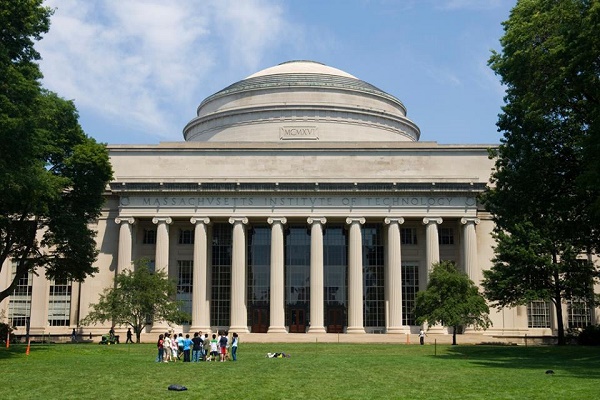
When it comes to science, technology, and innovation, no university on Earth carries more weight than Massachusetts Institute of Technology (MIT). MIT is not just a top university — it is a global engine of progress, responsible for breakthroughs that have reshaped how humanity lives, works, communicates, and explores the universe.
If Harvard is the center of power and Stanford is the birthplace of disruption, MIT is the place where the future is engineered.
This long-form evergreen guide explores MIT in exceptional depth — its philosophy, academics, culture, admissions, campus life, and why it remains the most influential technical university in the world.
Overview of MIT
-
Location: Cambridge, Massachusetts
-
Founded: 1861
-
Type: Private Research University
-
Motto: Mens et Manus (“Mind and Hand”)
MIT was founded during the Industrial Revolution with a radical idea: education should combine theory with practice. That philosophy still defines the institute today.
MIT does not exist to preserve knowledge — it exists to create it.
What Makes MIT Unique
MIT is fundamentally different from traditional elite universities.
It prioritizes:
-
Problem-solving over prestige
-
Experimentation over memorization
-
Impact over tradition
At MIT, students are not trained to simply understand the world — they are trained to change it.
MIT’s Global Reputation and Rankings
MIT consistently ranks as the #1 or #2 university in the world, especially in:
-
Engineering
-
Computer Science
-
Artificial Intelligence
-
Physics
-
Mathematics
-
Robotics
-
Data Science
But MIT’s influence goes beyond rankings. Entire industries — from semiconductors to artificial intelligence — trace their origins back to MIT labs.
Academic Structure: Schools and Colleges
MIT is organized into five schools, each world-class.
School of Engineering
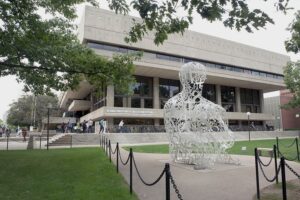
The heart of MIT and arguably the greatest engineering institution ever created.
Key departments include:
-
Electrical Engineering & Computer Science (EECS)
-
Mechanical Engineering
-
Aerospace Engineering
-
Chemical Engineering
-
Materials Science
MIT engineers don’t just design systems — they redefine what systems are possible.
School of Science
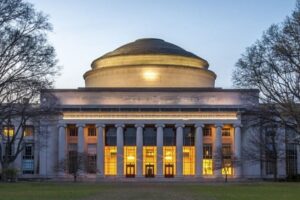
MIT’s science departments rival any institution globally.
Strengths include:
-
Physics
-
Mathematics
-
Biology
-
Chemistry
-
Earth & Planetary Sciences
MIT scientists have contributed to discoveries ranging from quantum mechanics to climate modeling.
School of Architecture and Planning
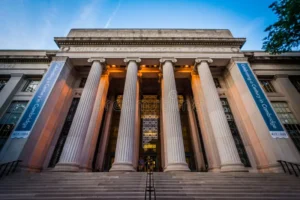
Home to:
-
Urban studies
-
Architecture
-
Media Lab
This school blends design, technology, and social impact — shaping how cities and societies evolve.
MIT Sloan School of Management

Unlike traditional business schools, Sloan focuses on:
-
Data-driven decision-making
-
Innovation leadership
-
Systems thinking
Graduates often work at the intersection of technology, policy, and business.
School of Humanities, Arts, and Social Sciences

Often overlooked, but exceptionally strong.
MIT believes technologists must understand:
-
Ethics
-
Philosophy
-
Economics
-
Political systems
-
Human behavior
This balance prevents innovation without responsibility.
Popular Majors and Programs
MIT students commonly study:
-
Computer Science
-
Artificial Intelligence
-
Robotics
-
Electrical Engineering
-
Mechanical Engineering
-
Physics
-
Mathematics
-
Data Science
Interdisciplinary programs are strongly encouraged, allowing students to design unique academic paths.
MIT’s Teaching Philosophy
Learning by Building

At MIT, learning is tactile.
Students:
-
Build robots
-
Design circuits
-
Launch startups
-
Conduct original research
Labs are central — not supplementary.
UROP: Undergraduate Research
MIT’s Undergraduate Research Opportunities Program allows students to work directly with faculty on real research projects — sometimes from their first year.
This level of access is rare globally.
Problem Sets Culture
MIT is famous (and infamous) for its intense problem sets (“psets”), which:
-
Push students beyond comfort zones
-
Emphasize deep understanding
-
Encourage collaboration
Struggle is part of the learning process — and embraced.
Admissions: How Hard Is MIT to Get Into?

MIT is among the most selective universities on Earth.
What MIT Looks For
MIT is less impressed by prestige and more by:
-
Curiosity
-
Creativity
-
Initiative
-
Technical depth
-
Love for problem-solving
Perfect grades alone are not enough.
Undergraduate Admissions
MIT evaluates students holistically, focusing on:
-
Strong math and science foundation
-
Original projects (coding, research, inventions)
-
Passion for learning
-
Character and collaboration
MIT values builders, tinkerers, and thinkers.
Graduate Admissions
Highly competitive, especially in engineering and AI fields.
Applicants must demonstrate:
-
Research excellence
-
Clear goals
-
Ability to contribute to MIT’s mission
Tuition and Financial Aid
MIT is expensive — but also extraordinarily generous.
Key Financial Aid Facts
-
Need-blind admissions
-
100% of demonstrated need met
-
Many students attend tuition-free
-
Financial aid does not affect admission
MIT believes talent should never be limited by income.
Campus Life at MIT
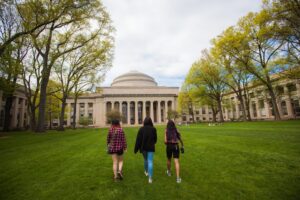
The MIT Campus

MIT’s campus blends:
-
Brutalist architecture
-
Modern research labs
-
Open collaborative spaces
It feels more like a research city than a traditional campus.
Student Culture
MIT students are:
-
Intense but supportive
-
Collaborative rather than competitive
-
Passionate about ideas
There is a strong culture of mutual help and shared struggle.
Hacks and Creativity
MIT is famous for “hacks” — elaborate, clever pranks that demonstrate engineering creativity rather than disruption.
These hacks are part of MIT folklore.
Innovation, Startups, and Global Impact
MIT has produced:
-
Thousands of startups
-
Entire industries
-
Breakthrough technologies
If MIT alumni formed a country, its economy would rank among the world’s largest.
Entrepreneurship is not optional at MIT — it is embedded into the culture.
Notable Alumni

MIT alumni include:
-
Nobel Prize winners
-
Tech founders
-
Leading scientists and engineers
-
Policy makers and innovators
Their influence spans technology, medicine, space exploration, and climate science.
Career Outcomes
MIT graduates are among the most employable and highest-paid in the world.
Common career paths include:
-
Tech & AI research
-
Engineering leadership
-
Startups & entrepreneurship
-
Finance & quantitative roles
-
Academia & policy
MIT degrees open doors globally — especially in technical fields.
Criticism and Reality Check
MIT is not for everyone.
Challenges include:
-
Intense workload
-
High pressure
-
Emotional and mental strain
However, MIT provides strong mental health resources and emphasizes community support.
Students often say MIT was the hardest — but most rewarding — experience of their lives.
Why MIT Matters More Than Ever
As humanity faces:
-
Artificial intelligence disruption
-
Climate change
-
Energy transitions
-
Space exploration
-
Biotechnology revolutions
MIT sits at the center of solutions.
It is not just educating students — it is engineering the future of civilization.
Final Thoughts
MIT is not at all a place for comfort. It is a place for challenge, creation, and consequence.
To study at MIT is to accept a responsibility:
to use knowledge not just for success — but for impact.
In the world of higher education, MIT is not merely elite.
It is essential.