
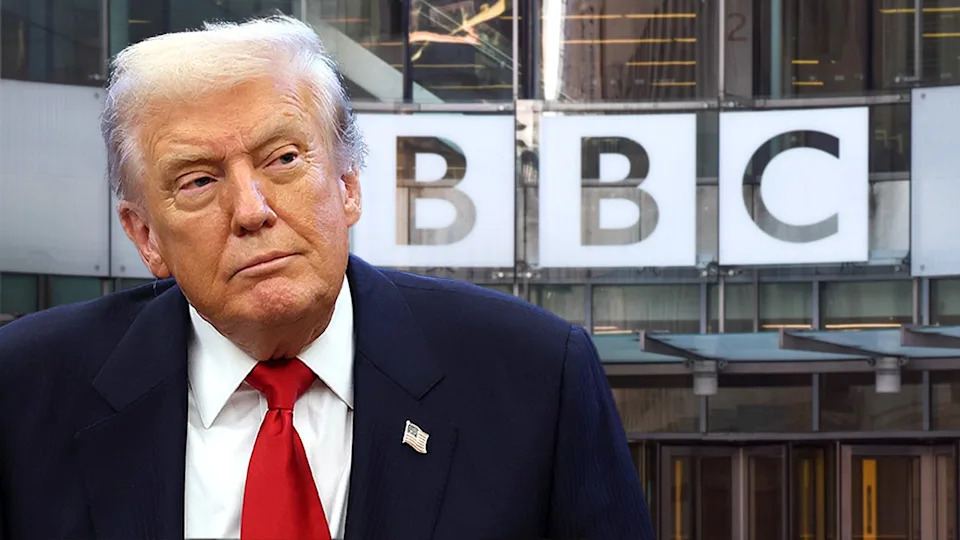
The world’s oldest national broadcaster, the BBC, finds itself locked in a high-stakes legal battle across the Atlantic. Former US President Donald Trump has launched a staggering $5 billion defamation lawsuit against the corporation, alleging that a BBC Panorama documentary maliciously edited his January 6, 2021 speech, creating a false impression of incitement. The BBC, while having previously apologised for a “mistaken impression,” has now stated unequivocally that it will “defend this case,” setting the stage for a monumental clash over journalistic integrity and political accountability.
The Heart of the Dispute: A Critical Edit
At the core of this legal maelstrom is a specific edit within the Panorama documentary, aired in the UK ahead of the 2024 US election. Trump’s legal team contends that the BBC “intentionally, maliciously, and deceptively doctoring his speech” from January 6, 2021, the day a riot erupted at the US Capitol. In his original address, Trump told supporters, “We’re going to walk down to the Capitol, and we’re going to cheer on our brave senators and congressmen and women.” Significantly, over 50 minutes later in the same speech, he declared, “And we fight. We fight like hell.” The Panorama programme, however, presented a condensed clip showing Trump saying: “We’re going to walk down to the Capitol… and I’ll be there with you. And we fight. We fight like hell.” The BBC acknowledged this edit gave “the mistaken impression” that Trump had “made a direct call for violent action.”

BBC’s Stance: Apology, But No Payout
Despite their earlier apology for the “mistaken impression,” the BBC has firmly rejected Trump’s demands for compensation and disputed any “basis for a defamation claim.” A BBC spokesperson reiterated their commitment to “defending this case,” adding they would make no further comment on ongoing legal proceedings. This firm stance underscores the corporation’s commitment to its editorial independence and a robust media defence against what it perceives as an unfounded legal challenge.
The Quest for Damages and Reach
Trump’s lawsuit, filed in Florida, accuses the broadcaster of defamation and violating a trade practices law, demanding a hefty $5 billion. A key point of contention revolves around the documentary’s reach. The BBC maintains it did not distribute the Panorama programme on its US channels, restricting availability to UK viewers via iPlayer. However, Trump’s legal team challenges this, citing agreements with third-party distributors like Blue Ant Media, which allegedly held North American licensing rights. While Blue Ant confirmed acquiring rights, they stated the version they received “did not include the edit in question” and was never aired in the US. The lawsuit also claims Floridians may have accessed the programme via VPNs or BritBox, underscoring the borderless nature of digital content and its potential for broad dissemination.
Internal Fallout and Political Ripples
The controversy has not been without internal repercussions for the BBC. A leaked internal memo in November criticised the speech edit, reportedly leading to the resignations of then Director-General Tim Davie and head of news Deborah Turness. Politically, Downing Street has backed the principle of a “strong, independent BBC,” while emphasising the need for the broadcaster to “maintain trust, correcting mistakes quickly.” Opposition figures like Nigel Huddleston and Sir Ed Davey have expressed concerns about the impact of the lawsuit on licence fee payers and urged political leaders to address Trump directly.
A Broader Battle for Media Defence
This **Trump defamation** lawsuit is the latest in a series of legal actions the former President has launched against news organisations, often securing significant settlements. Chris Ruddy, a Trump ally and CEO of Newsmax, acknowledged the high bar for winning defamation suits in the US but suggested the BBC settle to avoid estimated $50m-$100m litigation costs. Conversely, former BBC Radio controller Mark Damazer argued that not fighting the case would be “extremely damaging to the BBC’s reputation.” Damazer stressed this battle is fundamentally about the BBC’s independence, distinguishing it from American media companies with commercial interests potentially swayed by political pressure. The **BBC lawsuit** thus transcends a mere financial dispute; it is a critical test of journalistic freedom in an increasingly litigious political landscape. The ongoing legal saga, involving the **Panorama edit** and the **January 6** context, will undoubtedly be watched closely by media organisations worldwide, as the **Trump BBC** confrontation unfolds, highlighting the enduring importance of **media defence**.