

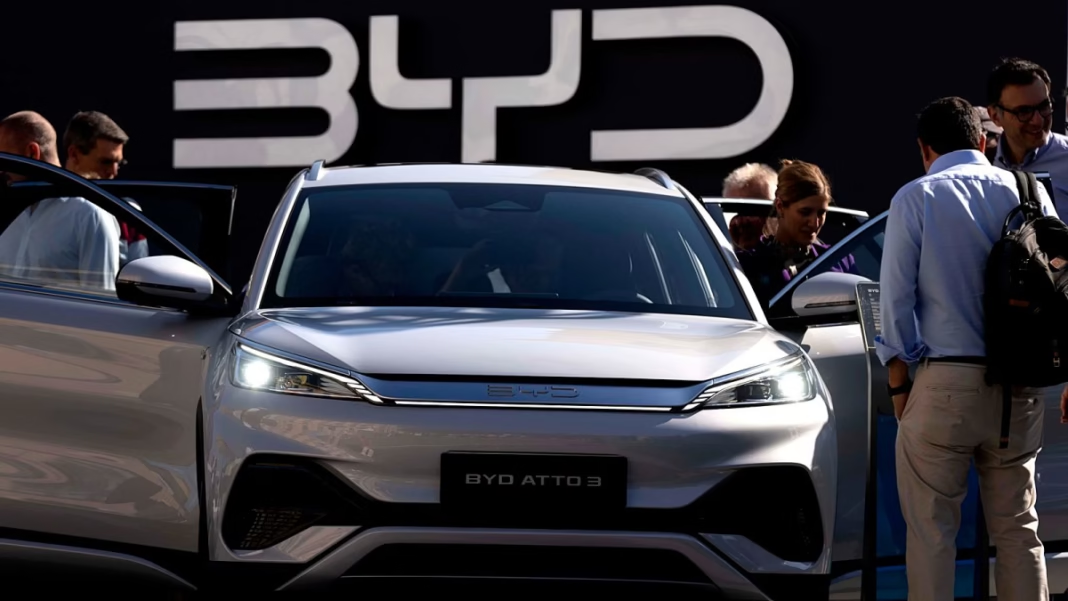
China’s electric vehicle giant BYD is on the brink of overtaking Tesla to become the world’s largest electric vehicle seller, marking a major shift in the global EV industry. The development reflects changing consumer preferences, aggressive pricing strategies, and China’s growing dominance in clean-energy manufacturing.
A Turning Point in the Global EV Race
For years, Tesla symbolized the electric vehicle revolution, setting benchmarks in innovation, design, and scale. Now, BYD’s rapid rise is reshaping that narrative. With soaring sales across Asia, Europe, and emerging markets, BYD is closing the gap — and in some segments, already pulling ahead.
Industry data indicates that BYD’s combined sales of fully electric and plug-in hybrid vehicles have surged at a pace unmatched by any other automaker. This momentum places the company on track to claim the top global position by total EV volume.
Why BYD Is Gaining Ground So Fast
Affordable Pricing at Massive Scale
BYD’s biggest advantage lies in affordability. While Tesla has focused on premium pricing and margin protection, BYD has flooded the market with competitively priced models targeting middle-class and first-time EV buyers.
Vertical Integration
BYD controls much of its own supply chain — from batteries to semiconductors — reducing costs and shielding the company from global supply disruptions. This level of integration allows faster production cycles and more stable pricing.
Diverse Product Line
Unlike Tesla’s relatively limited lineup, BYD offers:
-
Compact city cars
-
Sedans and SUVs
-
Electric buses and commercial vehicles
This wide portfolio gives BYD access to multiple customer segments across different regions.
Tesla’s Position: Strong Brand, Growing Pressure

Tesla remains a dominant force, especially in North America and parts of Europe. Its strengths include:
-
Industry-leading charging infrastructure
-
Advanced software and autonomous driving features
-
Strong brand loyalty
However, Tesla faces increasing pressure from price competition, slowing demand in some mature markets, and intensifying global rivalry — not just from BYD, but from a wave of Chinese EV manufacturers.
China’s Growing Influence on the EV Market
BYD’s rise also highlights a broader trend: China’s leadership in electric mobility. Government support, battery innovation, and large domestic demand have helped Chinese automakers scale faster than competitors elsewhere.
As Chinese EV brands expand overseas, traditional automakers and established EV leaders are being forced to rethink pricing, production, and strategy.
What This Means for Consumers
For buyers, BYD’s ascent could be good news:
-
Lower EV prices globally
-
Faster innovation cycles
-
More choices across price ranges
Increased competition may push all automakers to improve efficiency, affordability, and technology — accelerating the transition away from internal combustion engines.
What Comes Next
If current trends continue, BYD overtaking Tesla would mark a symbolic shift in the EV era — from a Silicon Valley-led revolution to a China-driven manufacturing powerhouse.
The race is far from over. Tesla continues to invest in next-generation vehicles, battery tech, and AI-driven systems. But BYD’s momentum suggests the future of electric vehicles will be defined less by a single icon — and more by scale, speed, and accessibility.
Why This Moment Matters
The battle between BYD and Tesla is no longer just about two companies. It represents:
-
A shift in global industrial power
-
The rise of China in clean-energy leadership
-
A faster push toward affordable electric mobility worldwide
Whoever leads the EV market next will shape how quickly — and how fairly — the world moves toward a cleaner transportation future.