

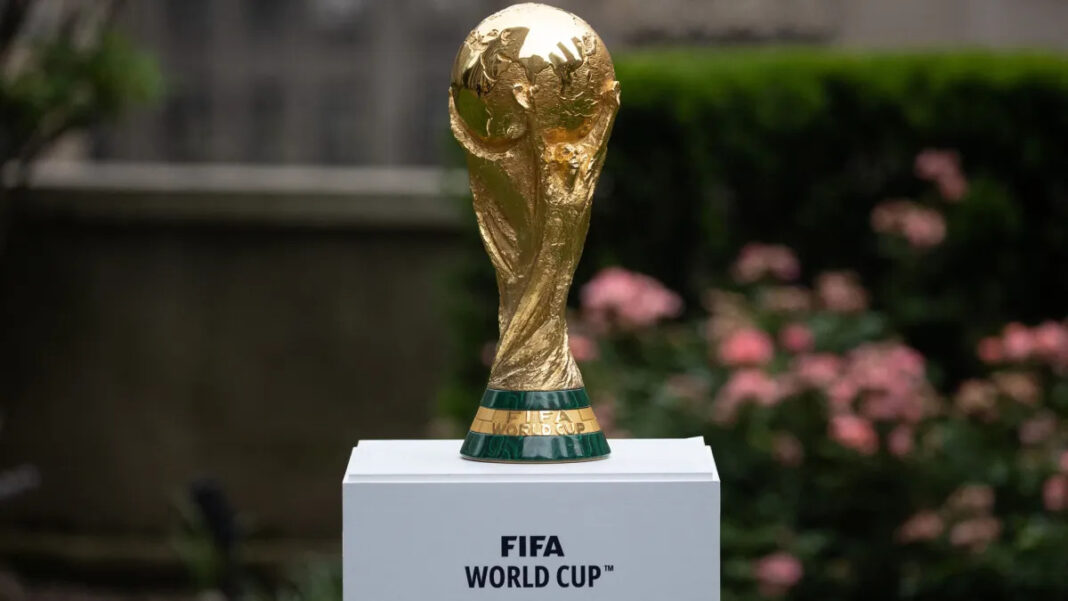
FIFA has announced a new low-cost ticket tier for the 2026 FIFA World Cup, sparking headlines about a so-called “€45 World Cup ticket.” Fans can easily get confused while coming across such news, so don’t worry, we have simplified it for you!
Fans who were frustrated by the rising prices and welcomed the news of a cheaper ticket may now feel a little bit confused as the reality of the announcement behind the scene is quite different and complicated.
If one only looks at the announcement, the news appears to be a huge victory for football fans, particularly those who have been bickering that going to the World Cup is getting more and more expensive. However, as it is the case with most of the headline-grabbing claims, the details are very important. The “€45 ticket” is not a general offer for all fans, and it is not available through normal public sales. It only refers to a very specific ticket category with certain limits and conditions, and many people may overlook that at their first reading. Knowing the functioning of such a system is the main thing to finding out if this choice is really at hand.
The newly introduced ticket is in fact officially priced at $60 per game which is approximately equal to €50–€55 depending on the exchange rates. In some areas, mainly the UK, it has been referred to as a “€45 ticket”, but the exact price will differ by currency and local charges. A very important point to remember is that this ticket level is conceived as an entry-level supporter account only and hence, it is not a general low-price ticket that everyone can have access to.
According to FIFA, the $60 ticket will be on offer for the whole 104 matches at the 2026 World Cup, even for the matches, which are in great demand or for the final. It will be sold at a fixed price different from many other tickets, saying that it will not be subjected to dynamic or surge pricing, which is a system that has been blamed for increasing the costs during the periods when the demand is at its highest.

On the other hand, the availability of such tickets is extremely scarce. These cheap tickets are only 10% of the quota for each national football association of each country. Since the national quotas themselves are only a part of the total tickets, it means that the $60 option accounts for very small fractions of those who will attend the match. To put it another way, only a few thousand fans may be able to get these tickets for any match in the world.
Distribution is another point for these tickets to consider. They will not be sold to the general public through the FIFA ticketing portal. Rather, they would be sold by member associations that would be involved in the process of selling to clubs or supporters. In other words, fans must first get permission from their country’s football federation to participate. Each federation will formulate its allocation rules through which official supporter groups may be prioritized, membership history, or attendance at international tournaments.

FIFA has, however, put this effort in the context of a move that serves the “real” fans, amid the criticism that tickets for the World Cup are getting less and less accessible. Member organizations have, in turn, expressed their views that very high prices and dynamic pricing schemes tend to exclude normal fans and change the stadium atmosphere. So fixed-price entry tier creation is presumably the FIFA reaction to that pressure though critics argue it does not suffice.
The authority has also made changes to its refund policy support tickets. For instance, it says if a person applies for a conditional ticket related to the team’s progress and the team gets knocked out, administrative fees will be removed in certain cases. It is aimed to lessen financial risks for support teams that may not go far in the tournament.

Although FIFA has put into practice a less expensive option for World Cup tickets, it is not one that will appeal to the masses. The €45 headline is just a way of simplifying the system, which is still competitive, limited, and mostly controlled by the national federations rather than open to the general public.
To get one of those tickets, fans will mainly need to personally follow closely the news from their football association regarding eligibility and application deadlines as these will certainly be different in every country. While the demand for the World Cup in 2026 is still rising, as these tickets are the cheapest to get, so will be the hardest to obtain.
As excitement builds toward the 2026 FIFA World Cup, the introduction of a lower-priced ticket distribution shows that FIFA as an association is at least acknowledging growing concerns about affordability among people. But despite the “€45 ticket” headlines, these seats remain limited, tightly controlled, heavily monitored and far from accessible to most fans. For supporters hoping to attend, the real deciding factor will not be the advertised price, but whether their national federation and local authorities offer a fair and transparent path to secure one. Until then, the debate over who the World Cup is truly for global fans or premium-paying spectators is likely to continue well beyond kickoff

 ticket tier for the 2026 World Cup, but availability is limited. Here’s who can actually get it.)