

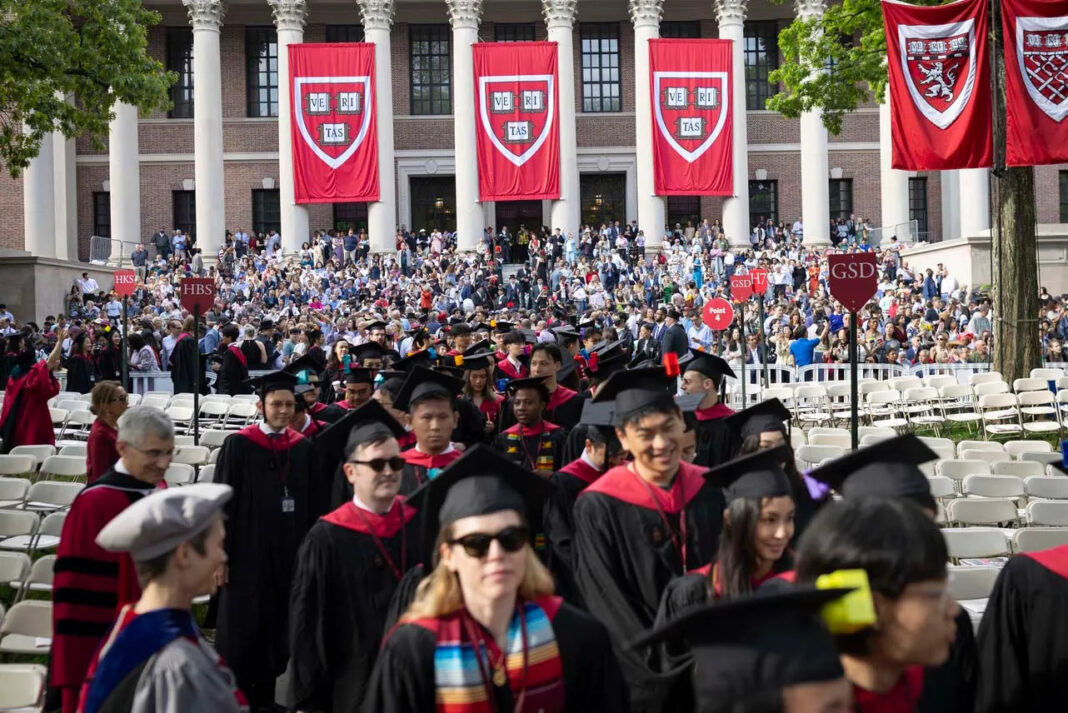
When people around the world think of higher education excellence, one name rises above almost all others: Harvard University. More than just a university, Harvard has become a global symbol of academic prestige, leadership, and influence.
Founded nearly four centuries ago, Harvard has shaped presidents, Nobel laureates, Supreme Court justices, CEOs, scientists, and cultural icons. This evergreen guide explores everything you need to know about Harvard University — from its academic structure and admissions to campus life, costs, and why it continues to dominate global education.
Overview of Harvard University
-
Location: Cambridge, Massachusetts
-
Founded: 1636
-
Type: Private Ivy League University
-
Motto: Veritas (Truth)
Harvard is the oldest university in the United States and consistently ranks among the top institutions in the world. Its name carries unmatched recognition — not just in academia, but across politics, business, law, science, and culture.
Why Harvard Is So Influential
Harvard’s influence extends far beyond its classrooms. It operates as:
-
A global research powerhouse
-
A leadership training ground
-
A policy and intellectual think tank
-
A cultural and historical institution
What makes Harvard unique is not just excellence in one area — but dominance across almost every discipline.

Global Rankings and Reputation
Harvard consistently appears in the top 5 universities worldwide across major global rankings. Its strongest areas include:
-
Law
-
Medicine
-
Business
-
Economics
-
Political Science
-
Public Policy
-
Life Sciences
Yet Harvard’s real strength lies in its breadth. Very few universities can claim elite status in such a wide range of fields.
Academic Structure: Schools and Colleges
Harvard is not a single school — it is a federation of elite institutions, each operating with significant autonomy.
Harvard College (Undergraduate)
Harvard College offers a liberal arts and sciences education that emphasizes:
-
Critical thinking
-
Writing and analysis
-
Broad intellectual exploration
Students are encouraged to explore before declaring a concentration (major).
Graduate and Professional Schools
Harvard’s graduate ecosystem includes:
-
Harvard Law School – One of the most powerful legal institutions globally
-
Harvard Business School – The gold standard for MBA education
-
Harvard Medical School – A global leader in medicine and research
-
Harvard Kennedy School – Public policy and global governance
-
Harvard Graduate School of Education
-
Harvard School of Public Health
Each school attracts top talent from around the world.
Popular Majors and Fields of Study
Harvard students pursue a wide variety of disciplines, but some of the most popular include:
-
Economics
-
Government (Political Science)
-
Computer Science
-
Biology and Life Sciences
-
Social Sciences
-
History
-
Mathematics
At the graduate level, law, business, medicine, and public policy dominate Harvard’s global reputation.
Teaching Style and Academic Culture
Case Method and Discussion-Based Learning
Especially prominent at Harvard Business School and Kennedy School, students learn by analyzing real-world problems rather than memorizing theory.
Research-Driven Education
Even undergraduates have access to world-class research opportunities, often working alongside leading scholars.
Intellectual Intensity
Harvard is demanding. The pace is fast, expectations are high, and students are constantly challenged — but also deeply supported.
Admissions: How Hard Is It to Get In?
Harvard is one of the most selective universities in the world.
Undergraduate Admissions
-
Extremely low acceptance rate
-
Holistic evaluation
-
Focus on academic excellence, leadership, initiative, and character
Grades and test scores matter — but who you are and what you’ve done with your opportunities matters just as much.
Graduate Admissions
Each school has its own process, but common factors include:
-
Strong academic background
-
Professional or research experience
-
Clear sense of purpose
-
Exceptional recommendations
International students are actively recruited and form a significant part of Harvard’s community.
Tuition, Fees, and Financial Aid
Harvard is expensive — but also among the most generous universities in the world when it comes to financial aid.
Key Highlights
-
Need-blind admissions
-
Full demonstrated need met
-
Many families pay far less than expected
-
Students from lower-income backgrounds often pay little to nothing
Harvard’s philosophy is that financial ability should never block talent

Campus Life and Student Experience
Residential House System
Undergraduates live in residential houses that create tight-knit communities — combining housing, dining, mentorship, and social life.
Student Organizations
Harvard hosts thousands of student clubs, including:
-
Academic societies
-
Political organizations
-
Cultural and international groups
-
Entrepreneurship hubs
-
Performing arts and media
There is something for everyone.
Libraries, Resources, and Facilities
Harvard has:
-
The largest academic library system in the world
-
Cutting-edge research labs
-
Museums, theaters, and innovation centers
-
Access to Boston and Cambridge’s intellectual ecosystem
Few universities can match Harvard’s sheer scale of resources.
Notable Alumni
Harvard’s alumni list reads like a global power directory:
-
Multiple U.S. Presidents
-
Supreme Court Justices
-
Nobel Prize winners
-
Fortune 500 CEOs
-
Influential economists, scientists, writers, and artists
This alumni network provides unmatched global reach and opportunity.
Career Outcomes and Opportunities
Graduates of Harvard go on to careers in:
-
Law and judiciary
-
Finance and consulting
-
Technology and startups
-
Government and diplomacy
-
Medicine and research
-
Media and academia
A Harvard degree opens doors worldwide — often for life.
Criticism and Reality Check
Despite its prestige, Harvard is not without criticism:
-
Intense academic pressure
-
Highly competitive environment
-
Perceived elitism
However, many students describe Harvard not as cutthroat — but as challenging alongside extraordinary peers.
Why Harvard Still Matters
In a changing world where online learning and alternative education paths are growing, Harvard remains relevant because it offers:
-
Human connection at the highest intellectual level
-
Access to power, ideas, and influence
-
A training ground for future leaders
Harvard doesn’t just teach knowledge — it shapes how decisions are made globally.
Final Thoughts
Harvard University is more than a school. It is an institution that has shaped history and continues to influence the future.
To study at Harvard is not simply to earn a degree — it is to enter a global network of ideas, leadership, and responsibility.
As part of our Top Universities in the USA series, Harvard stands as a benchmark — a place where ambition meets opportunity, and where education extends far beyond the classroom.