

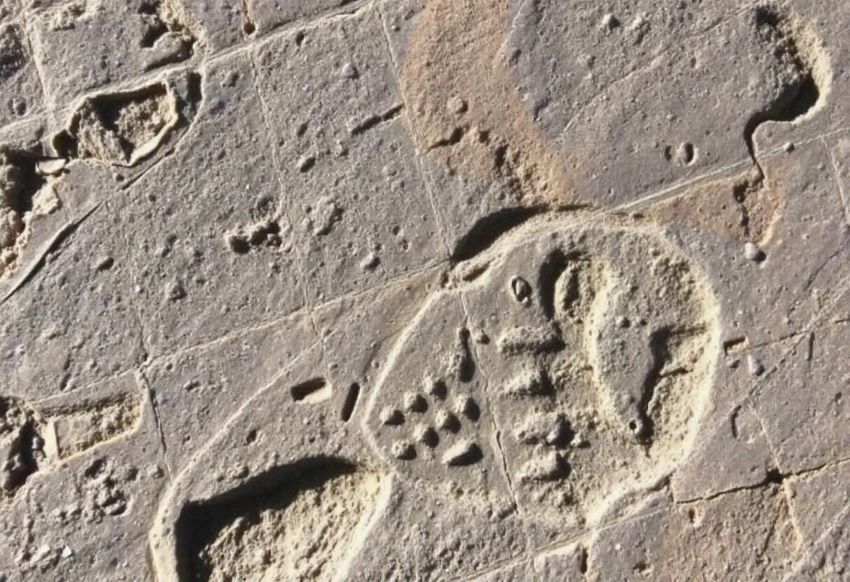
Imagine a landscape teeming with colossal, long-necked creatures, their heavy footsteps imprinting on soft earth, creating a testament to a world millions of years gone. Now, imagine those very imprints, thousands of them, resurfacing on a vertical mountain face in northern Italy, offering an unparalleled window into the Triassic period. This isn’t a scene from a blockbuster movie, but the breathtaking reality of a recent **Italy discovery** in the stunning Stelvio National Park.
Paleontologists and enthusiasts alike are buzzing over the unprecedented find: a vast expanse of **dinosaur footprints**, some measuring an impressive 40cm (15in) in diameter, meticulously preserved and dating back an astounding 210 million years. These aren’t just random marks; they are aligned in parallel rows, many boasting clear traces of toes and claws, painting a vivid picture of a prehistoric migration. Experts believe these **ancient tracks** belong to **prosauropods**, herbivorous dinosaurs characterized by their long necks, small heads, and formidable claws.

For Milan-based paleontologist Cristiano Dal Sasso, the discovery was nothing short of miraculous. “I never would have imagined I’d come across such a spectacular discovery in the region where I live,” he exclaimed. His sentiment perfectly captures the wonder of stumbling upon an “immense scientific treasure” right in one’s backyard. The initial sighting came last September, when photographer Elio Della Ferrera spotted the footprints stretching for hundreds of metres on a sheer mountain wall within the remote **Stelvio park**, north-east of Milan.
The geological narrative behind these **Triassic fossils** is equally fascinating. During the Triassic period, roughly 250 to 201 million years ago, what is now a vertical Alpine chain was once a flat, expansive tidal plain. It was on this ancient surface that the prosauropod herds left their indelible marks. Dal Sasso notes that the site reveals not just movement, but behavior. “This place was full of dinosaurs; it’s an immense scientific treasure,” he emphasized, adding that the herds moved in harmony. More complex behaviors were also evident, with traces of groups of animals gathering in a circle, potentially for defensive purposes. These two-legged giants, capable of reaching up to 10m (33ft) in length, sometimes left handprints in front of their footprints, suggesting they occasionally stopped and rested their forelimbs on the ground.
Elio Della Ferrera, the photographer whose keen eye led to this monumental find, hopes the discovery will “spark reflection in all of us, highlighting how little we know about the places we live in: our home, our planet.” Given the area’s remote nature and lack of accessible paths, the Italian culture ministry has announced plans to deploy drones and advanced remote sensing technology to study the site without disturbing its delicate preservation.

Adding a modern-day twist to this ancient narrative, the Stelvio national park is located in the Fraele valley, near Italy’s border with Switzerland – an area set to host the Winter Olympics next year. The Italian Ministry of Culture offered a poetic reflection on this coincidence: “It’s as if history itself wanted to pay homage to the greatest global sporting event, combining past and present in a symbolic passing of the baton between nature and sport.” This extraordinary find serves as a powerful reminder of Earth’s deep history and the wonders that still lie hidden, waiting for us to uncover them.