

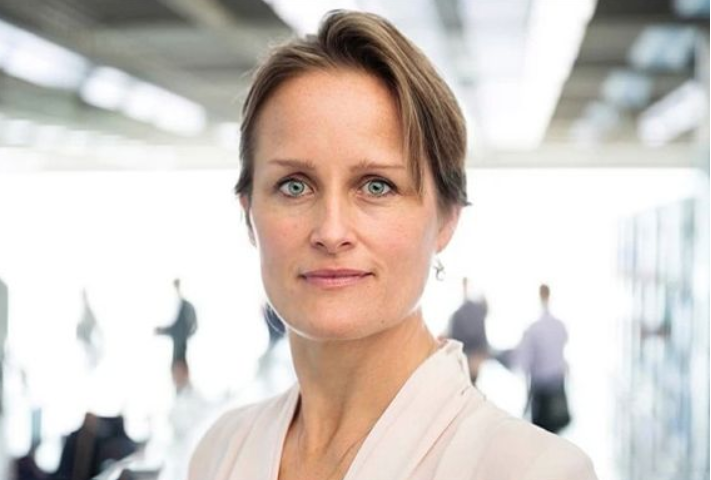
Britain’s Secret Intelligence Service (MI6) stands at a critical juncture, navigating a global landscape where the lines between conflict and calm blur more than ever before. At the helm of this formidable organization is Blaise Metreweli, its first female chief, who recently delivered a stark and timely assessment of the current geopolitical climate. In her inaugural public speech, Metreweli declared, “we are now operating in a space between peace and war,” laying bare the complex, “interlocking web of security challenges” that define modern UK intelligence operations and demand a renewed strategic focus.
Metreweli’s address sharply focused on the multifaceted and insidious threat posed by Russia. She characterized Russia’s actions as “testing us in the grey zone with tactics that are just below the threshold of war.” This concept of grey zone warfare – where state actors employ subtle yet damaging methods to destabilize adversaries without triggering overt military confrontation – is now at the forefront of MI6’s concerns. The ongoing war in Ukraine serves as a grim backdrop, with Metreweli emphasizing “the menace of an aggressive, expansionist and revisionist Russia” and affirming the UK’s unwavering resolve to maintain pressure on Vladimir Putin on Ukraine’s behalf. Examples of these Russia hybrid tactics are plentiful, including unexplained drone incursions over vital infrastructure and sophisticated cyber-attacks on critical networks, all meticulously designed to sow fear, create confusion, and manipulate public opinion. As Metreweli aptly put it, “The export of chaos is a feature not a bug in this Russian approach to international engagement.” While Western sanctions have undeniably impacted Russia’s economy, driving its exports eastward, they have yet to curb Putin’s determination in the Ukraine conflict, underscoring the enduring and complex nature of this challenge for UK intelligence.

Beyond the immediate threats, Metreweli articulated a profound and forward-looking vision for the future of UK intelligence. She identified “the defining challenge of the 21st century” as not merely who possesses the most powerful technologies, but crucially, “who guides them with the greatest wisdom.” Power, she noted, is becoming increasingly diffused and unpredictable, shifting from traditional state control to corporations and even skilled individuals. To effectively counter these rapidly evolving threats and maintain a strategic edge, MI6 must fundamentally integrate technology into every facet of its operational framework.
Metreweli’s own journey to the top job, having served since 1999, included a significant period within the fabled “Q Branch” – the real-life counterpart to Ian Fleming’s fictional division, responsible for developing cutting-edge gadgets and secure communication methods. Her emphatic focus on mastering new technologies is paramount. She issued a powerful call to action for all intelligence officers: to become technologically fluent, “not just in our labs, but in the field, in our tradecraft.” Her vision extends to agents becoming “as comfortable with lines of [computer] code as we are with human sources, as fluent in Python as we are in multiple languages.”
The specific mention of Python, a programming language that has been around for decades, might initially surprise some. However, its significance is not lost on those operating within the shadowy world of espionage. In an age where data is paramount, where traditional false identities are easily compromised by biometric scanning at borders, MI6 needs to prove its continued relevance. Blaise Metreweli’s transformative leadership signals a crucial understanding: for UK intelligence to remain effective and agile, it must not only embrace technological fluency but also innovate constantly, adapting its methods to navigate the intricate and perilous “grey zone” that defines the space between peace and war.