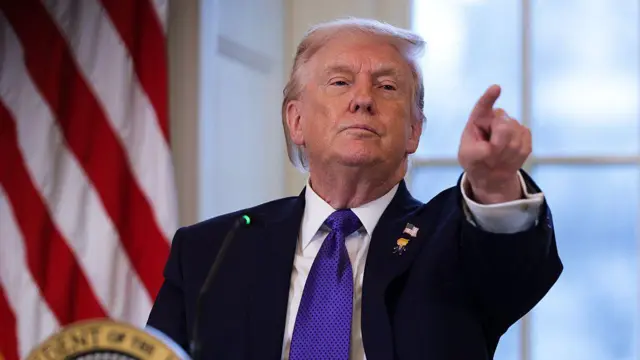

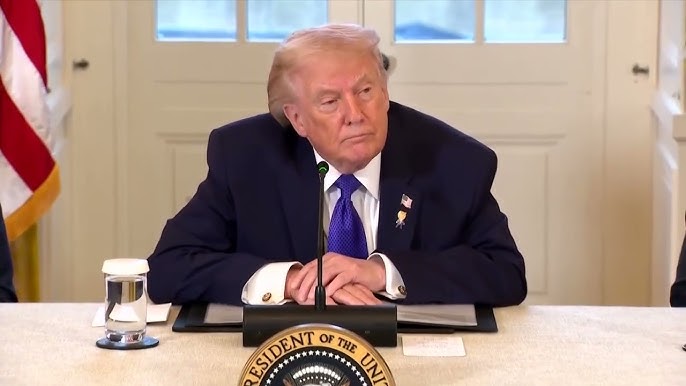
Former U.S. President Donald Trump has reignited global controversy by declaring that the United States needs to “own” Greenland in order to prevent Russia and China from gaining strategic control over the Arctic territory.
The remarks place Greenland once again at the center of a growing global power struggle over the Arctic — a region increasingly seen as the next frontier of geopolitical competition.
Trump’s Argument: Security Over Sovereignty
Trump framed his comments around national and global security, arguing that Greenland’s geographic position makes it too strategically important for the U.S. to leave vulnerable to rival powers. He claimed that without firm American control, Russia and China could expand their military and economic footprint in the Arctic, threatening U.S. interests.
According to Trump, ownership would allow the United States to:
-
Secure Arctic shipping routes
-
Expand missile defense and surveillance systems
-
Prevent rival military bases near North America
-
Control access to critical Arctic resources
His language suggested urgency rather than diplomacy, reigniting debate over whether his proposal is strategic realism or reckless rhetoric.

Why Greenland Matters Geopolitically
Greenland sits at a crucial crossroads between North America and Europe, giving it outsized importance in modern defense planning.
Strategic Military Location
The island plays a key role in:
-
Early-warning missile detection
-
Arctic air and naval surveillance
-
Control of North Atlantic routes
The U.S. already maintains a military presence there, underscoring Greenland’s importance to American defense architecture.
Arctic Resources and Melting Ice
As Arctic ice melts, Greenland’s value continues to rise:
-
Rare earth minerals critical for modern technology
-
Potential oil and gas reserves
-
New shipping lanes connecting Asia, Europe, and North America
Trump’s comments reflect concerns that rival powers could leverage these advantages if the U.S. does not act decisively.
Russia and China in the Arctic
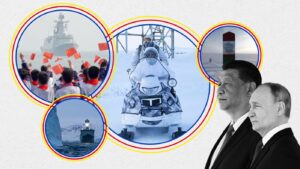
Russia has significantly expanded its Arctic military infrastructure, reopening bases, deploying advanced weapons systems, and increasing patrols. China, while not an Arctic nation, has labeled itself a “near-Arctic state” and invested heavily in polar research, shipping routes, and resource projects.
Trump’s warning reflects broader U.S. fears that the Arctic could become a new theater of great-power rivalry — similar to the South China Sea.
Denmark and Greenland Push Back
Greenland is an autonomous territory within the Kingdom of Denmark, and both Danish and Greenlandic leaders have consistently rejected any notion of U.S. ownership.
Officials have emphasized that:
-
Greenland is not for sale
-
Sovereignty lies with the people of Greenland
-
Cooperation does not equal control
Trump’s renewed rhetoric risks straining relations with a long-standing U.S. ally while reopening sensitive sovereignty debates.
Serious Strategy or Political Messaging?
Analysts remain divided on Trump’s intent. Some view his comments as:
-
A blunt articulation of U.S. strategic anxieties
-
An attempt to force allies to take Arctic security more seriously
Others see it as:
-
Unrealistic and legally impossible
-
Damaging to diplomatic norms
-
Fuel for unnecessary international tension
Regardless of intent, the remarks have ensured Greenland remains a geopolitical flashpoint.
What ‘Owning’ Greenland Would Actually Mean
Any attempt to acquire Greenland would face:
-
Overwhelming political resistance
-
International legal barriers
-
Strong opposition from Denmark and Greenland
-
Global backlash over territorial sovereignty
Experts agree that expanded cooperation, not ownership, is the only realistic path — through defense agreements, investment, and joint Arctic strategy.
Why This Matters Now
Trump’s statement highlights a larger reality: the Arctic is no longer remote or irrelevant. It is rapidly becoming:
-
A key military zone
-
A resource battleground
-
A trade corridor of the future
As climate change reshapes geography, global power dynamics are shifting northward — and Greenland sits at the center of that shift.
What Comes Next
While no formal policy has followed Trump’s remarks, they are likely to:
-
Renew diplomatic statements from Denmark and Greenland
-
Intensify debate over Arctic defense cooperation
-
Push Arctic security higher on global agendas
Even without action, the rhetoric alone shapes how nations think about control, influence, and security in the Arctic.
Final Take
Trump’s claim that the U.S. must “own” Greenland to block Russia and China may sound extreme — but it reflects very real strategic anxieties about the Arctic’s future.
Whether framed as bold realism or dangerous overreach, the message is clear: Greenland is no longer just ice and isolation — it is power, position, and the future of global security.