
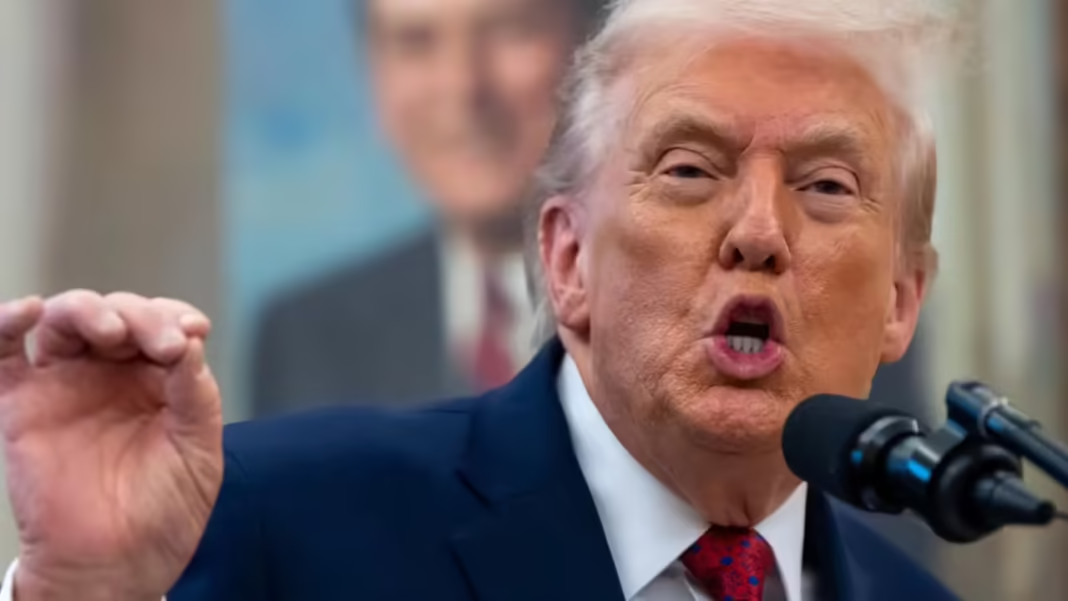
In a dramatic escalation of his long-standing grievances with media organizations, former US President Donald Trump has initiated a colossal $5 billion (£3.7 billion) defamation lawsuit against the British Broadcasting Corporation (BBC). The lawsuit centers on a heavily scrutinized edit of his January 6, 2021 speech, featured in a Panorama documentary that aired in the UK. This significant media lawsuit thrusts the global broadcaster into a high-stakes legal battle, with implications for journalistic integrity and public perception.

Filed in Florida, Trump’s Trump lawsuit alleges both defamation and a violation of trade practices, claiming the BBC “intentionally, maliciously, and deceptively doctoring his speech.” The contentious segment in the Panorama documentary juxtaposed parts of his address given before the Capitol riot. Trump’s original speech on January 6, 2021, included lines like, “We’re going to walk down to the Capitol, and we’re going to cheer on our brave senators and congressmen and women,” followed much later by, “And we fight. We fight like hell.” The BBC’s edit, however, allegedly presented these remarks as contiguous: “We’re going to walk down to the Capitol… and I’ll be there with you. And we fight. We fight like hell.” Trump previously announced his intent to sue, stating, “They cheated. They changed the words coming out of my mouth.”
The BBC defamation row saw the broadcaster issue an apology last month, acknowledging the edit created “the mistaken impression” that Trump had “made a direct call for violent action.” However, the BBC steadfastly rejected his demands for compensation and dismissed the notion of any “basis for a defamation claim.” This internal controversy within the BBC deepened following a leaked memo criticizing the edit, which reportedly led to the resignations of its director general, Tim Davie, and head of news, Deborah Turness. This internal fallout underscores the gravity of the editorial misstep surrounding the January 6 speech.
Prior to the lawsuit being filed, BBC lawyers had already mounted a defense, arguing that the edit lacked malice and that Trump suffered no demonstrable harm from the program. They also contended that the BBC did not hold the rights to, nor did it distribute, the Panorama documentary on its US channels, with access restricted to UK viewers via BBC iPlayer.
However, the Trump BBC lawsuit counters these claims, citing alleged agreements the BBC has with other distributors for content, specifically a third-party media corporation supposedly holding licensing rights to the documentary outside the UK. Furthermore, the suit argues that Florida residents could have accessed the program via VPNs or streaming services like BritBox. “The Panorama Documentary’s publicity, coupled with significant increases in VPN usage in Florida since its debut, establishes the immense likelihood that citizens of Florida accessed the Documentary before the BBC had it removed,” the lawsuit asserts. The BBC has yet to address these specific claims regarding third-party distribution or VPN access.
As the legal proceedings unfold, this unprecedented media lawsuit between a former US President and a global public service broadcaster highlights critical questions about editorial responsibility, the interpretation of political speeches, and the reach of content in a digitally interconnected world. The outcome of this $5 billion battle will undoubtedly set a significant precedent for future cases involving media organizations and high-profile public figures.