

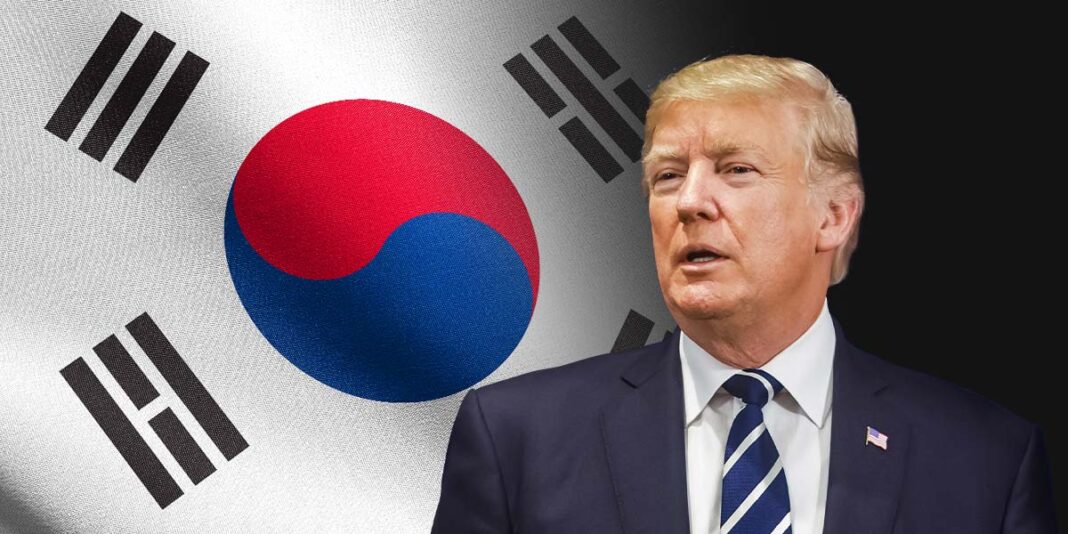
Former U.S. President Donald Trump has announced a sharp increase in U.S. tariffs on imports from South Korea, raising duties to 25% in a move that significantly escalates trade tensions between two long-standing allies.
The decision signals a renewed push toward protectionist trade policies and underscores Trump’s long-held view that U.S. trade relationships must be rebalanced in favor of domestic industry.
What Trump Announced
Trump said the United States will impose a 25% tariff on a broad range of South Korean imports, arguing that previous trade arrangements placed American manufacturers and workers at a disadvantage. The tariff hike represents one of the most aggressive actions taken against a key U.S. ally in recent years.
While the exact list of affected goods has not been fully detailed, officials indicated that industrial products, manufactured goods, and key export sectors are likely to be impacted.
Why South Korea Is Being Targeted

Trump framed the tariff increase as a response to what he described as persistent trade imbalances and unfair market access for U.S. companies. South Korea is one of America’s major trading partners, particularly in:
-
Automobiles and auto parts
-
Electronics and technology components
-
Steel and industrial materials
According to Trump, the tariff hike is intended to pressure Seoul into renegotiating trade terms and increasing imports of American-made goods.
A Return to Hardline Trade Policy
The move reflects Trump’s broader trade philosophy:
-
Use tariffs as leverage
-
Prioritize domestic manufacturing
-
Force trading partners back to the negotiating table
During his presidency, Trump repeatedly used tariffs not just as economic tools but as political instruments, arguing they protected American jobs and reduced reliance on foreign supply chains.
South Korea’s Likely Response
South Korean officials are expected to strongly object to the decision, viewing it as damaging to both economic cooperation and diplomatic relations. Seoul may explore:
-
Diplomatic negotiations to seek exemptions
-
Legal challenges under international trade rules
-
Countermeasures targeting U.S. exports
As a close U.S. security ally, South Korea faces the added challenge of balancing economic retaliation with broader strategic cooperation.
Impact on U.S. Consumers and Businesses
Tariffs of this scale could have ripple effects inside the United States:
-
Higher prices for imported consumer goods
-
Increased costs for manufacturers relying on South Korean components
-
Disruptions to supply chains
While Trump argues tariffs strengthen domestic production, critics warn they often shift costs to consumers and businesses rather than foreign exporters.
Global Trade Implications
The tariff increase adds to global uncertainty at a time when international trade is already under strain. Analysts warn that:
-
Escalating tariffs could slow global economic growth
-
Allies may reassess trade reliance on the U.S.
-
Retaliatory measures could trigger wider trade disputes
The decision also raises questions about the future of trade cooperation in the Asia-Pacific region.
Supporters vs Critics
Supporters Say
-
Tariffs protect American workers
-
Trade deficits weaken national strength
-
Allies should offer fairer access to U.S. markets
Critics Argue
-
Tariffs hurt consumers and businesses
-
Trade disputes weaken alliances
-
Cooperation is more effective than confrontation
The divide reflects ongoing debates over globalization and economic nationalism.
Why This Matters Now
Trump’s decision comes amid renewed focus on:
-
Supply chain security
-
Domestic manufacturing
-
Strategic competition in Asia
By targeting South Korea, the move underscores Trump’s willingness to prioritize economic leverage even in relationships traditionally defined by alliance and cooperation.
Final Take
Raising tariffs on South Korean imports to 25% marks a significant escalation in U.S. trade policy rhetoric and action. Whether the move leads to renegotiated trade terms or sparks retaliation remains to be seen, but it clearly signals that trade confrontation is once again central to Trump’s economic strategy.
As global markets react and diplomatic efforts intensify, the tariff decision is likely to reverberate well beyond Washington and Seoul — shaping trade dynamics in the months ahead.