

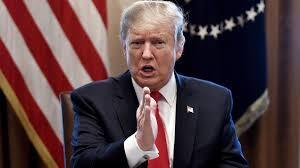
Former U.S. President Donald Trump has issued a stark warning to Iran, saying the United States would intervene if Iranian authorities kill protesters, as unrest continues to spread across the country. His comments add a sharp international dimension to Iran’s internal crisis and signal heightened U.S. attention to how Tehran handles demonstrations.
Trump’s Warning to Tehran
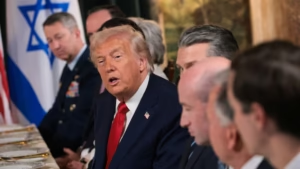
Speaking publicly, Trump said that while the United States prefers to avoid direct involvement, crossing the line into mass killings of civilians would trigger a response. He framed the issue as a red line tied to human rights rather than regime change, emphasizing that the world is closely watching Iran’s actions.
Trump’s statement reflects a tougher rhetorical posture compared to recent U.S. messaging, putting direct pressure on Iranian leadership as protests persist.
What’s Happening in Iran
Iran has seen widespread protests driven by economic hardship, political restrictions, and anger over government policies. Demonstrations have erupted in major cities and smaller towns alike, with protesters calling for reforms and accountability.
Security forces have responded with arrests, crowd-control measures, and restrictions on movement and communication. Human rights groups and activists claim the response has grown increasingly aggressive, raising fears of lethal force being used to suppress dissent.
Why Trump’s Statement Matters
A Clear Red Line
By explicitly mentioning intervention if protesters are killed, Trump introduced a clear threshold that goes beyond diplomatic condemnation. This shifts the conversation from internal unrest to potential international consequences.
Pressure on Iranian Leadership
The warning increases scrutiny on Iranian security forces and leadership, potentially influencing how force is deployed during protests.
Global Signal
Trump’s remarks also send a message to U.S. allies and adversaries that Washington is prepared to respond strongly if state violence escalates against civilians.
Iran–U.S. Tensions in the Background
Relations between the United States and Iran remain deeply strained, shaped by years of sanctions, nuclear tensions, and regional power struggles. Domestic unrest inside Iran adds another layer of instability to an already volatile relationship.
Any U.S. intervention — diplomatic, economic, or otherwise — would carry serious implications for regional security and global markets.
Debate Over Intervention
Trump’s warning has sparked debate over what “intervention” would actually mean. Possible interpretations include:
-
Expanded sanctions or diplomatic isolation
-
International legal or humanitarian pressure
-
Support for international monitoring
-
In extreme cases, direct action
Critics caution that intervention risks escalation, while supporters argue that clear consequences are necessary to deter violence against civilians.
What Happens Next
Much now depends on how Iranian authorities respond to ongoing demonstrations. If protests continue and security forces escalate their tactics, international pressure is likely to intensify rapidly.
For now, Trump’s message is aimed at deterrence — signaling that the use of lethal force against protesters would not remain an internal matter, but one with global consequences.
Why This Is a Critical Moment
Iran’s handling of protests could shape its international standing for years to come. Trump’s warning underscores how domestic repression can quickly become an international flashpoint, especially when global powers publicly define red lines.
As tensions rise, the coming days will be crucial in determining whether the crisis de-escalates — or draws in outside powers.