


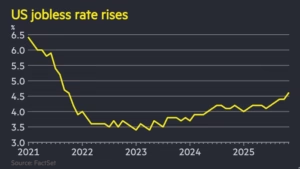
A significant chill has swept through the American job market, as US unemployment climbed to a four-year high of 4.6% in November. This concerning statistic, while accompanied by more job additions than predicted, signals growing weakness in the labour market. It presents a fresh dilemma for the Federal Reserve, forcing policymakers to balance a softening job market against persistent inflationary pressures.
November’s Mixed Labour Data:
According to the Labor Department’s report, the unemployment rate rose to 4.6% last month, up from 4.4% in September. This four-year peak arrived even as employers added 64,000 jobs in November. However, these gains followed a sharp contraction of 105,000 jobs in October, primarily due to 162,000 federal government role cuts. The Labor Department also revised downwards initial job estimates for September and August, indicating broader weakness than previously understood.

The Federal Reserve’s Tightrope Walk:
This mixed labour data intensifies the Federal Reserve’s challenge. The US central bank is weighing competing priorities: a weakening job market versus stubbornly rising prices above their 2% target. To stimulate the slowing labour market, the Fed recently made its third interest rate cut this year. While projections suggest officials expect one more cut in 2026, compelling data showing further weakening could shift their perspective, boosting arguments for additional cuts next year.
Disrupted Data and Growing Skepticism:
The context of November’s report adds complexity. This delayed release was the first snapshot of the labour market since the 43-day federal government shutdown, which disrupted data collection. Analysts noted the report was unusually “muddied.” Chris Zaccarelli, chief investment officer at Northlight Asset Management, stated, “For a data-dependent Fed, this morning’s data will only increase the internal debate.” Seema Shah, chief global strategist at Principal Asset Management, added that data distortions and tighter immigration policies mean payroll figures “should not be taken at face value,” though she conceded the unemployment rate rise would “trigger some creeping concern within the Fed.”
Uneven Sector Performance and Long-Term Worries:
Beneath the headline figures, job gains were uneven. Healthcare added 46,000 jobs (11,000 in nursing), and construction rose by 28,000. Conversely, transportation and warehousing shed 18,000 jobs, and manufacturing fell by 5,000. More concerning is the rise in long-term unemployment (out of work for over six months), climbing to 1.9 million in November from 1.7 million a year prior. This human toll is exemplified by Ivan Maurizi, a 37-year-old software engineer. After nearly a year of unemployment, he finally secured a new role, yet his job security remains tenuous amidst industry changes. “If I lost this [job] today,” he reflects, “I wouldn’t know when the next job would land. It could take a year.”
Conclusion:
November’s labour data presents a complex and challenging picture for the US economy. The rise in US unemployment to a four-year high clearly indicates a softening job market. However, the report’s nuances and persistent inflation ensure the Federal Reserve faces a contentious path forward. As policymakers deliberate amidst disrupted data and real human impact, the trajectory of the American job market remains uncertain, demanding careful observation and strategic intervention.